
Barrel Roll
Developer: Barrel Roll
Publisher: Rubika Supinfogame
Released: October 2025
Platforms: Steam
It limits your resources so you’re thinking about every tool you’ve selected.
If it was any other game I would have disregarded it based on the genre. I tend to be a fan of the deckbuilding type of games, back in the day I remember Wizard 101 as one of my first experiences with gaming as a whole despite its heavy monetization. However, recent trends have heavily leaned towards the roguelike format. It’s not one I’m personally a fan of, and more often than not its the reason I’ve passed on a good amount of releases after finding out they were roguelikes. last year I gave Slay the Spire a try due to its universally positive reception, but quickly found the loop tiring even in the little I ended up getting to.
Somehow, Barrel Roll felt different from the others I’ve tried in that firstly, it is not a true “deckbuilder.” There are no cards. But in essence each card in your deck is available until you use them, limited only by quantity and position in our player character’s barrel. In the heat of a fight your only agency is choosing between the next three bullets in the chamber. Ironically, such a level of clarity serves to create more opportunity for strategizing as you can plan for exactly how you want a fight to go with the only “unknowns” being what the opponents end up doing. A system such as this one is what pulled the JRPG player in me that enjoys when most of the fight actually happens before a single encounter is triggered.
And to the point of it as a roguelike, the briefness of the campaign tends to actually work in its favor as I’m less eager to rush back to where I was previously after dying. When it first happened in my initial run, it did feel the odds were against me in a way. The following run, however, gave much more to work with. By run three I had figured out a build that’s capable of shutting down any boss’ gimmick with the correct planning.
There is a certain level of glee that comes from gradually replacing the old rusty bullets from the tutorial with more unique loads. At first the added effects in exchange for less damage is good enough, but eventually I found myself building towards something more concrete in my barrel. I was personally partial towards bullets centered around delaying enemy turns and interrupting actions. The slots of the barrel themselves can be upgraded to further chosen strategies based on what is loaded in them, with the right arsenal and a well-timed sequence there’s potential for a single load to instantly take out any target. Navigating the map between encounters feels mostly like resource management, but the bounties you select along the way are where a run’s direction gets quietly decided.
Trinkets were more akin to wildcards in my runs. With bullets there was always some idea of what type of effect I’d end up with or the simplicity of them would be enough to find a spot for them somehow. Trinkets were different in that they can range from inconsequential to game-altering depending on what I come across. It wasn’t too uncommon that I felt compelled to restructure my barrel to better fit a newly acquired trinket, even if the benefit was minimal at first. But often it was worth it as the run continues and I gain access to more tools.
Although not receiving the same spotlight as the barrel, skills add a supportive layer of depth to the combat loop. As combat progresses focus points are acquired allowing for the use of three skills depending on how much has been gained. These three skills aren’t as customizable as the barrel, but I think that ecosystem surrounding focus makes up for it with the different ways I could interact with focus points. Depending on your load it can become easy to frequently unleash high-powered skills by ramping skill points, but alternatively there are items that reward hoarding focus points.
”There was an unusual satisfaction with crafting a build of my own throughout the run, but wasn’t sure how to feel afterwards.”
I found myself partial to a loop of increasing enemy turn countdowns to reduce the rounds where I’d end up taking damage, or at least reducing my overall damage taken. When I was having to battle with the prospect of facing down potential eight damage per turn on average, it came to a point where I was able to cut that well in half for most encounters. And during my initial successful run in particular I came across a bullet capable of disrupting an enemy’s action, and forcing them to select a new one. Boss encounters that previously felt like wars of attrition started folding before they could get going. Gimmicks that had my back against the wall in the first run became more manageable as I had more room to breathe.
However, as I continued using this strategy it did feel as if I found the “correct” playstyle in this game. After completing a few runs this way, it became hard to imagine using any other method in the future. A potential one I could see is heavy utilization of shield breaks or playing around a bullet with an excessively high damage boost, but it always felt like something that would end up being secondary to just delaying turns.
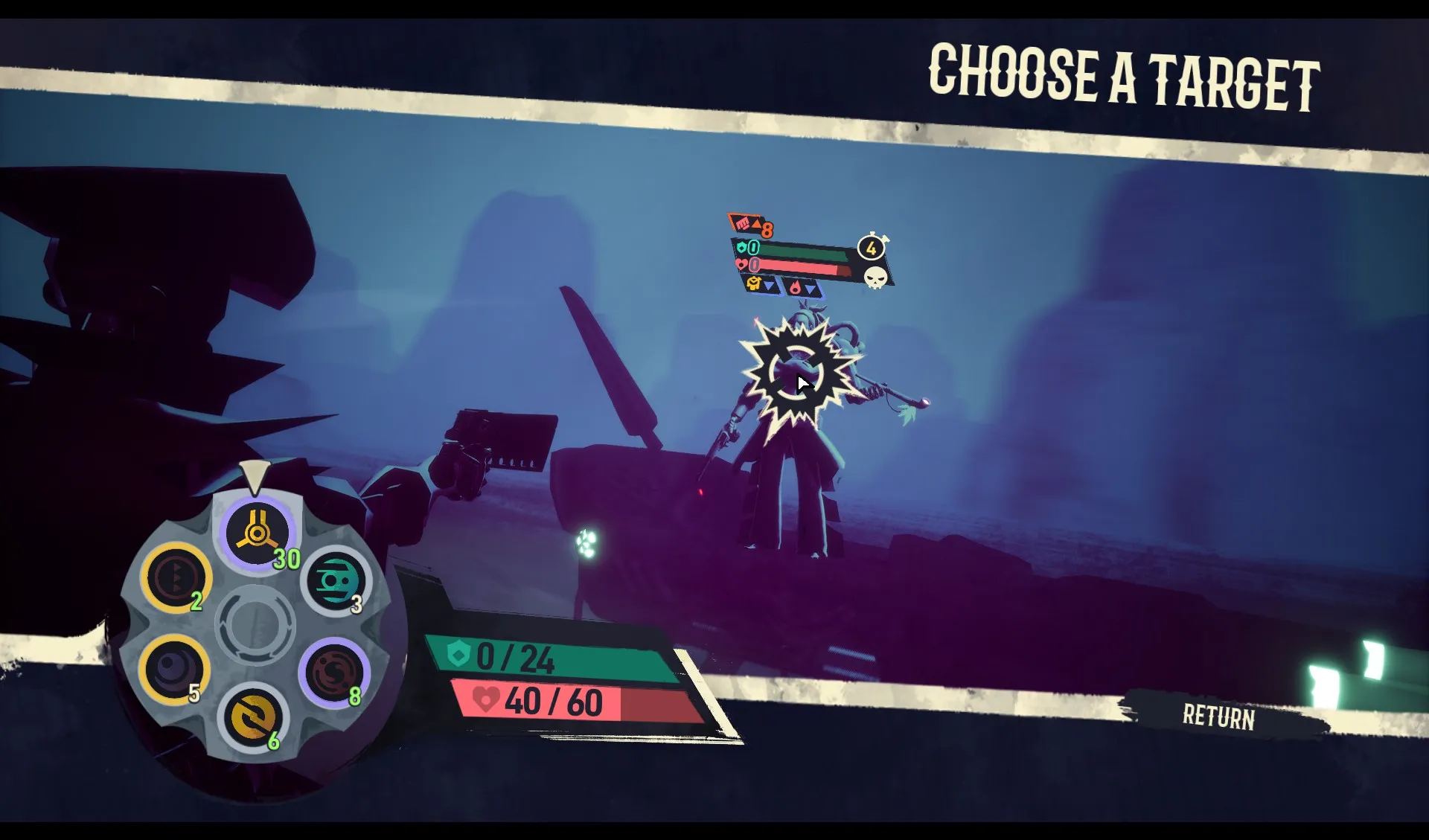
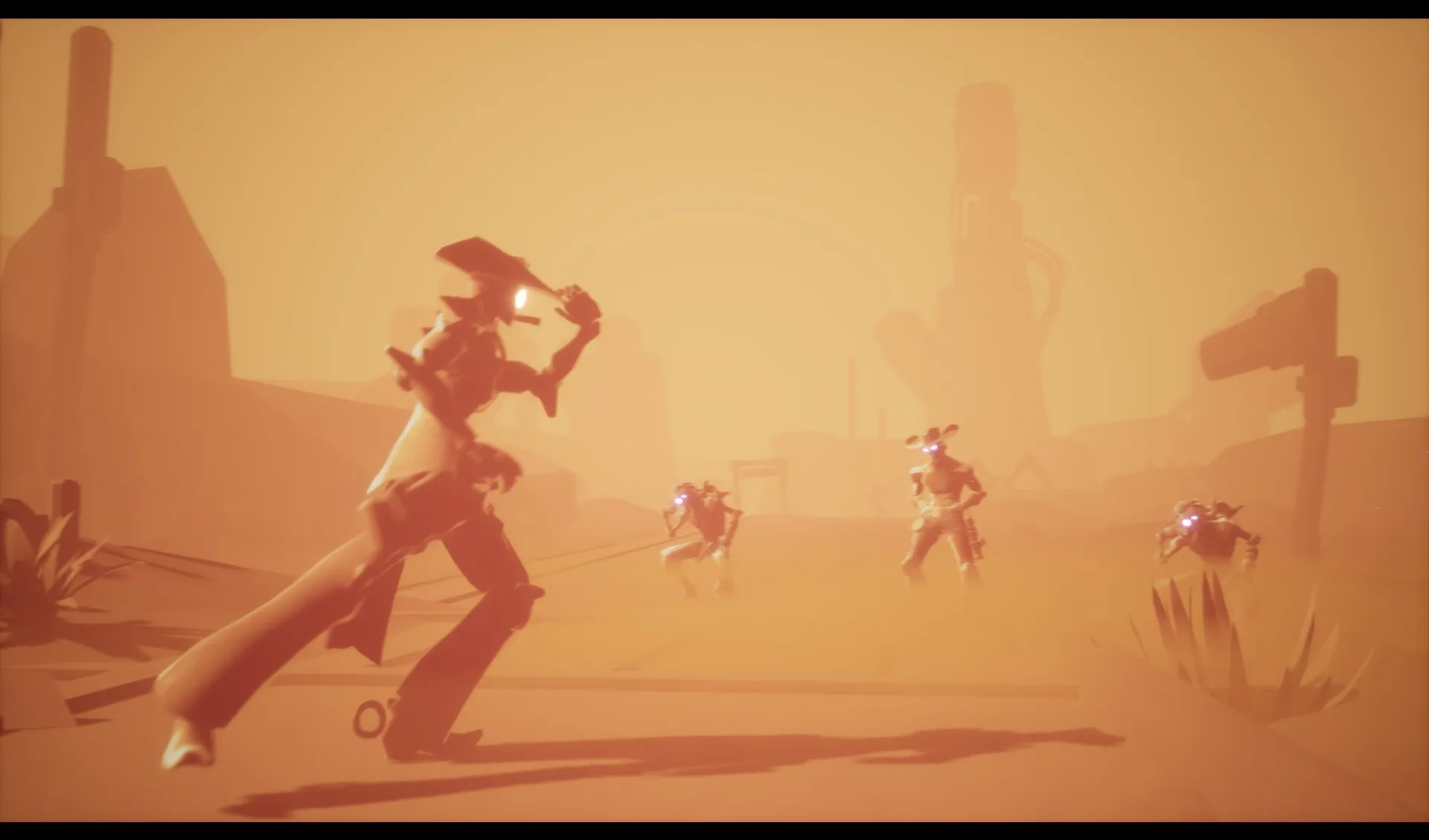
Visually, Barrel Roll gives a stylized aesthetic with clear inspiration from western media. At times it really feels like it takes place in an actual old west film, with mechanical character designs adding an additional fantastical element. Clean UI gives simplicity that assists in the overall experience, giving clarity to the player when needed. And while not an outstanding feature, the game’s sound direction serves to further these ideas and absolutely fits the intent of the developers. I feel if this direction was taken into something more expansive, such as a more conventional RPG, it could easily become one a favorite of mine given proper execution.
After six hours and three successful runs, it does feel as though this is most of what the game has to offer. That is not a bad thing, it’s much more than what I expect from a $5 student-developed project. Many other roguelikes insist on multiple runs to truly “complete” them in any sense. And I find a simpler game like this to be a breath of fresh air in comparison. And for those who want more, there are further challenges based on steam achievements. So even if a single run is short, I believe there would be merit to coming back to it in the future.
One last thing.
As a roguelike and a deckbuilder, Barrel Roll will appeal to those who enjoy a short loop with a clear beginning and end. If you simply enjoy the feeling of putting together your strategy it’s a good way to spend your time. But with it being a roguelike, I can see those who enjoy the meta hooks synonymous with the genre to be somewhat put off by this approach. They may find it underwhelming or find themselves wanting more after such focused gameplay. This is a game that’s low in scope but high in depth, and will be a fun experience for anyone mechanically-focused who looks forward to a short campaign where you have time to savor every moment. At five dollars and what I’d say is just two hours to a successful run, it’s an easy ask for anyone interested. And if you’re still on the fence, there should be a demo available if you look.
It’s a game that thrives off of limited resources, and somehow that will be enough.
Discussion
0